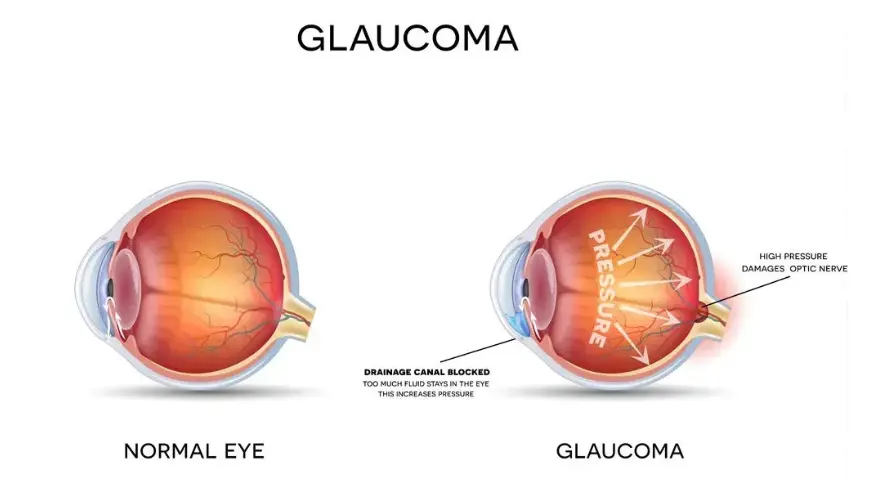
Glaucoma is a chronic eye disease that causes gradual vision loss due to damage to the optic nerve. The optic nerve is a critical pathway for transmitting visual information from the eye to the brain. Damage can lead to irreversible vision loss or even blindness. Glaucoma typically develops in the presence of elevated intraocular pressure (IOP), but it can also occur in the presence of normal intraocular pressure, making diagnosis and management complex.
The disease often has no symptoms in its early stages, and patients often go unnoticed until significant visual field loss develops. For this reason, glaucoma has been called the "silent thief of vision." Approximately three million people in the United States suffer from glaucoma, many of whom are unaware they are affected.
In this article, we will discuss the different types of glaucoma, their causes and risk factors, symptoms, and treatments.
Causes of Glaucoma
Glaucoma is primarily caused by a blockage in the circulation of intraocular fluid (aqueous humor) and an abnormally high intraocular pressure (IOP). Normally, the eye continuously produces aqueous humor, a clear fluid that drains through a structure called the angle (drainage angle) to maintain stable intraocular pressure. When this drainage system becomes blocked or when aqueous humor overproduces, the fluid cannot drain smoothly, leading to increased intraocular pressure, which can compress and damage the optic nerve. The optic nerve is composed of millions of nerve fibers that transmit visual signals from the eye to the brain. Once these fibers are damaged, vision loss is irreversible.
In some cases, optic nerve damage can occur even when intraocular pressure is within normal limits. This condition is called normal-tension glaucoma. The specific mechanism is not fully understood, but it may be related to insufficient blood supply to the optic nerve or a person's poor tolerance to intraocular pressure.
Who is at increased risk for glaucoma?
In addition to intraocular pressure, several other risk factors increase the likelihood of glaucoma:
Age: The risk increases significantly in people over 55 years old.
Genetic Factors: A family history of glaucoma is one of the most significant risk factors.
Ethnic Background: African Americans, Asians, and Latinos have a higher incidence of glaucoma, and the disease is more likely to progress.
Corneal Characteristics: Those with a thin central cornea are more susceptible to optic nerve damage.
Refractive Error: Those with high myopia or hyperopia are more likely to have abnormalities in the anterior chamber angle structure.
Systemic Conditions: Diabetes, hypertension, migraines, or sickle cell anemia can increase the risk of developing glaucoma.
Medication and Ocular Factors: Long-term use of corticosteroids, previous eye trauma, inflammation, or surgery can all contribute to secondary glaucoma.
In addition, glaucoma can also be caused by atypical factors such as trauma, chemical burns, severe infection, or blood vessel blockage, known as secondary glaucoma. Infants and children can also develop congenital or developmental glaucoma due to developmental abnormalities.
Because early glaucoma often has no obvious symptoms, regular comprehensive eye examinations are key to preventing blindness. For high-risk groups, such as African Americans over 40 years old, Mexican Americans over 60 years old, or those with a family history, they should undergo a dilated eye examination and intraocular pressure test every 1 to 2 years to enable early detection and intervention of disease progression.
Major Types of Glaucoma
Glaucoma is not a single disease, but rather a group of chronic eye diseases that can lead to optic nerve damage. Glaucoma can be divided into open-angle glaucoma, closed-angle glaucoma, and several specialized types based on the drainage mechanism and pathological features of the aqueous humor. Understanding the differences between these types is crucial for early detection and appropriate treatment.
1. Open-Angle Glaucoma
This is the most common type of glaucoma, accounting for approximately 80% to 90% of all cases. In this type, the eye's drainage angle (angle) remains open, but the trabecular meshwork gradually degenerates, obstructing aqueous humor outflow. As a result, intraocular pressure (IOP) slowly rises, compressing the optic nerve over time and causing irreversible vision loss.
Open-angle glaucoma progresses slowly, is painless, and its early symptoms are extremely subtle, often going undetected until significant visual field loss develops. Some patients, even with normal intraocular pressure, may develop optic nerve damage due to pressure sensitivity. This condition is called normal-tension glaucoma.
2. Angle-Closure Glaucoma
Angle-closure glaucoma is more common in Asian populations and is also known as narrow-angle glaucoma. In this type of glaucoma, the drainage angle between the iris and cornea is too narrow, easily obstructing the outflow of aqueous humor.
When the drainage angle gradually closes, chronic angle-closure glaucoma develops. Early symptoms may be asymptomatic. However, if the drainage angle is suddenly and completely blocked, intraocular pressure rises rapidly, triggering an acute angle-closure glaucoma attack.
An acute attack is a serious ophthalmic emergency with symptoms including severe eye pain, blurred vision, headache, nausea, vomiting, and the appearance of rainbow halos around lights. If left untreated, permanent blindness can occur within hours or days.
3. Secondary Glaucoma
Secondary glaucoma is not a primary disease but is caused by elevated intraocular pressure due to other ocular or systemic conditions. Common triggers include:
- Ocular trauma or scarring after surgery;
- Long-term use of corticosteroids;
- Intraocular inflammation (such as uveitis);
- Diabetic neovascular glaucoma;
- Advanced cataracts or retinal vein occlusion.
Secondary glaucoma can present as open-angle or closed-angle glaucoma, depending on the specific location of the aqueous humor outflow obstruction.
4. Congenital/Developmental Glaucoma
This type of glaucoma occurs in newborns or infants, often due to abnormal development of the anterior chamber angle during fetal development, which results in obstruction of aqueous humor outflow.
Typical symptoms include tearing, photophobia, frequent eye rubbing, corneal opacity, and abnormally enlarged eyeballs.
Early surgical treatment can significantly improve the prognosis, so regular ophthalmological screening of newborns is extremely important.
5. Other Special Types
- Pigmentary Glaucoma: Pigmentary granules in the iris occlude the trabecular meshwork, causing elevated intraocular pressure.
- Exfoliation glaucoma: Deposits of material from the anterior lens capsule form in the trabecular meshwork, obstructing the drainage of aqueous humor.
- Normal-tension glaucoma: Damage to the optic nerve occurs despite normal intraocular pressure, possibly due to insufficient blood flow or nerve vulnerability.
What are the symptoms of glaucoma?
Glaucoma symptoms vary depending on the type and stage of progression. Different types of glaucoma present significantly differently in the early and late stages. Most patients experience little to no symptoms in the early stages, so regular eye exams are crucial for preventing irreversible vision loss.
1. Open-angle glaucoma
This is the most common and insidious type of glaucoma. Early on, there are usually no obvious symptoms, and patients gradually lose their peripheral vision without noticing. As the disease progresses, the visual field loss gradually widens, eventually affecting central vision. Due to the lack of pain or discomfort, open-angle glaucoma is often called the "silent thief of vision."
Typical symptoms include:
- No noticeable symptoms in the early stages;
- Gradual reduction in side vision (peripheral visual field);
- Blurred central vision or blind spots in the late stages;
- Difficulty adjusting to dim light.
2. Angle-closure glaucoma
Angle-closure glaucoma can develop slowly or suddenly. When the drainage angle is completely blocked, intraocular pressure can rise dramatically over a short period of time, causing severe symptoms. This is an emergency and requires immediate medical attention.
Symptoms of an acute angle-closure glaucoma attack include:
- Severe eye pain and headache;
- Blurred vision or sudden loss of vision;
- The appearance of rainbow halos or halos around lights;
- Nausea and vomiting;
- Redness and tenderness of the eye;
- Some patients also experience eye swelling or forehead pain.
If left untreated, permanent optic nerve damage can occur within a short period of time.
3. Normal-Tension Glaucoma
In this type of glaucoma, intraocular pressure remains within normal limits, but the optic nerve is still damaged. The pathogenesis may be related to local blood flow deficiency or nerve vulnerability.
Symptoms:
- No symptoms in the early stages;
- Gradual blurring of vision;
- Gradual reduction of peripheral vision.
4. Secondary Glaucoma
Secondary glaucoma is caused by other diseases or external factors, such as trauma, inflammation, medications (such as steroids), or diabetes. Its symptoms vary and may resemble those of open-angle or closed-angle glaucoma.
Possible symptoms include:
- Blurred vision or halos around lights;
- Loss of peripheral vision;
- Eye pain or headache;
- Red eyes and photophobia;
- Nausea and vomiting.
5. Congenital or Developmental Glaucoma
This condition is more common in infants and young children and is caused by abnormal development of the eye's angle, which obstructs the drainage of aqueous humor.
Common manifestations include:
- Excessive tearing and photophobia;
- Frequent eye rubbing or squinting;
- Corneal opacity or abnormal eye enlargement;
- A dull or cloudy appearance in the eyes.
What does glaucoma feel like?
Most types of glaucoma, especially open-angle glaucoma, have few noticeable symptoms in their early stages, so many patients don't notice anything until their vision is permanently damaged. However, an acute attack of angle-closure or narrow-angle glaucoma is often severe, often described by patients as "the worst eye pain they've ever had." This is an eye emergency and requires immediate medical attention. Typical symptoms include:
- Severe eye pain or throbbing pain
- Redness of the eye
- Headache (usually on the same side as the affected eye)
- Blurred or foggy vision
- Colored halos around lights
- Dilated and unresponsive pupils
- Systemic reactions such as nausea and vomiting
Acute angle-closure glaucoma can cause irreversible damage to the optic nerve within hours. If not treated within 6 to 12 hours, permanent vision loss or even blindness can result. Therefore, if these symptoms occur, seek medical attention immediately at an emergency room or emergency eye center.
Diagnosis of Glaucoma
Glaucoma diagnosis relies on more than just measuring intraocular pressure. While elevated intraocular pressure is a major risk factor, some people with normal intraocular pressure may still develop glaucoma (called "normal-tension glaucoma"), while some people with elevated intraocular pressure may not develop glaucoma (called "ocular hypertension"). Therefore, a systematic and comprehensive examination to assess the health of the optic nerve and visual field is essential for a definitive diagnosis of glaucoma. Common examinations include:
Intraocular pressure measurement (IOP): Assessing whether intraocular pressure exceeds the normal range.
Dilated fundus examination: By dilating the pupil, the doctor can directly observe changes in the morphology of the optic nerve.
Optical coherence tomography (OCT): Using high-resolution imaging technology to measure the thickness of the optic nerve fiber layer, enabling early detection of glaucomatous damage.
Gonioscopy: Assessing the structure of the junction between the iris and cornea (the angle) to determine whether angle obstruction is present.
Corneal pachymetry: Helps correct IOP readings and avoid misdiagnosis due to variations in corneal thickness.
Slit lamp microscopy: Observing the anterior segment structures, including the cornea, lens, and aqueous humor.
Visual field examination: Detecting peripheral vision loss is an important tool for assessing glaucoma progression.
These examinations allow doctors to comprehensively assess a patient's eye health, determine the type and severity of glaucoma, and develop appropriate treatment and follow-up plans.
Treatment of Glaucoma
Glaucoma is a chronic disease that damages the optic nerve. While there is currently no cure, scientifically sound treatment can effectively control intraocular pressure, slow disease progression, and prevent further vision loss. Treatment options typically include medications, laser treatments, and surgery. Doctors will tailor a plan based on the patient's glaucoma type, disease severity, and individual health status.
1. Medication
Medication is generally the first choice for glaucoma management. Prescription eye drops containing ocular hypotensive agents work by promoting aqueous humor drainage or reducing aqueous humor production, thereby lowering intraocular pressure. Some patients may require a combination of medications to achieve optimal results. Common side effects include eye stinging, redness, blurred vision, or allergic reactions. For patients with poor medication compliance or significant side effects, doctors may adjust the medication regimen or consider alternative treatments. In some cases, oral beta-blockers or carbonic anhydrase inhibitors may be used in combination to further control intraocular pressure.
2. Laser Therapy
When medications are ineffective or difficult for patients to take long-term, laser surgery is an effective alternative.
Trabeculoplasty: For open-angle glaucoma, it lowers intraocular pressure by improving the function of the aqueous humor drainage channels.
Iridotomy: For closed-angle glaucoma, a tiny hole is created in the iris to restore aqueous humor flow.
Cyclophotocoagulation: Controls intraocular pressure by reducing aqueous humor production and is suitable for cases that have not responded to other treatments.
3. Surgery
For patients whose intraocular pressure is not effectively controlled by medication and laser therapy, microsurgery may be necessary.
Trabeculectomy: Creates a new drainage channel in the eyeball, allowing the aqueous humor to drain more smoothly.
Glaucomatous drainage device implantation: Implants a micro-drain to maintain long-term aqueous humor flow.
Minimally Invasive Glaucoma Surgery (MIGS): This is a new, less invasive surgical procedure, often performed simultaneously with cataract surgery. It offers the advantages of a quick recovery and low risk, making it suitable for patients in the early and middle stages of the disease.
4. Management of Special Types of Glaucoma
Acute angle-closure glaucoma is a medical emergency and requires immediate laser or surgical treatment to prevent irreversible optic nerve damage. Congenital glaucoma is often caused by congenital drainage system abnormalities and is primarily treated with surgical correction to restore aqueous humor flow.
5. Other Treatments Not Recommended
Although early studies have suggested that cannabis can temporarily lower intraocular pressure, its effects are short-lived and may reduce optic nerve blood flow, potentially outweighing its benefits. Currently, mainstream medical consensus is that cannabis cannot replace modern drug treatments.
If you're at high risk for glaucoma, the best preventative measure is a comprehensive annual eye exam. The key to treating glaucoma lies in early detection and long-term management. Patients should have regular checkups and follow their doctor's advice on medication or surgery to maximize their remaining vision.


