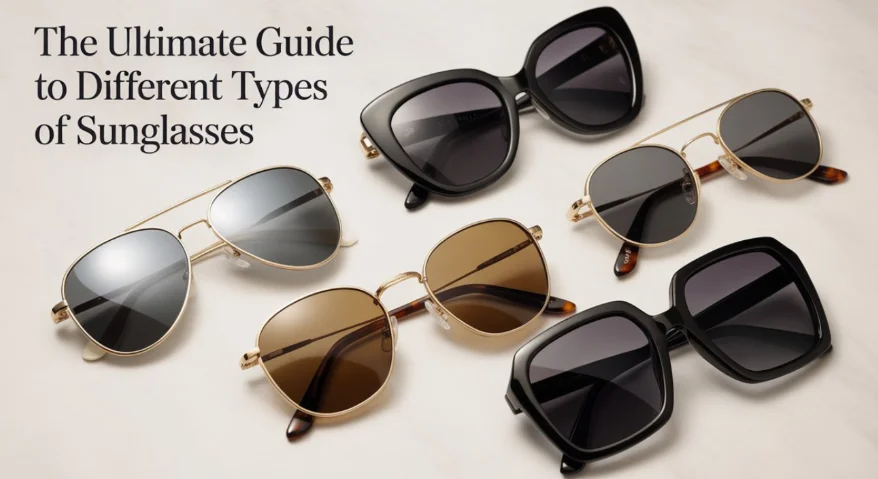
Sunglasses are more than just a fashion accessory; they're a visual tool that combines function and style. On one hand, they effectively block strong light and UV rays, reducing glare and eye strain. On the other hand, different frame structures directly impact the overall impression. Do you want to project a sharp, composed image, or a retro, casual style?
From a design perspective, sunglasses, like optical glasses, have clear style categories and structural language. The proportions of the frame, the roundness of the corners, the lens size, and even details like the keyhole-shaped bridge can alter the visual focus of the face and the overall style. Seemingly minor adjustments often result in drastically different fashion expressions.
Next, we will systematically analyze the classic shapes, design features, and suitable occasions for different types of sunglasses, helping you find a more professional and strategic choice between functionality and style.
Rectangular Sunglasses
If your goal is to create a sophisticated, polished look with long-lasting aesthetic appeal, rectangular sunglasses are often the safest and most effective choice. Why? Because their structural proportions inherently convey a sense of order and restraint.
Design-wise, rectangular frames are significantly wider horizontally than vertically, with overall lines extending primarily horizontally. The corners can be sharp right angles to emphasize a professional look, or soft rounded corners to balance facial contours and increase approachability. Different details determine whether it leans towards a business-like or urban casual style.
Compared to many sunglasses that emphasize exaggerated sizes or curves, the rectangular structure prioritizes proportion and clear contours. Therefore, it typically presents a low-key yet refined visual effect—not overly ostentatious, yet sufficiently impactful. If you want sunglasses that both flatter your face shape and maintain a professional and sophisticated overall look, rectangular styles are often a rational and mature choice.
Square Sunglasses
If you're aiming for a more impactful look and to accentuate your facial features, square sunglasses are often a more visually striking choice. Their core characteristics lie in large lenses and a clean, well-defined frame, resulting in a wider and fuller overall proportion that creates a distinctive style at first glance.
It's important to note that "square" doesn't equate to sharp or harsh. Most designs incorporate rounded corners, maintaining a strong silhouette without being overly sharp. This structural balance allows square frames to project a bold presence without appearing excessive.
Why are they often considered trendsetters? Because the large frame enhances facial contrast, boosts fashion appeal, and aligns perfectly with the current aesthetic trend emphasizing defined contours and proportions. If you want to convey confidence, avant-garde style, or urban chic through your sunglasses, square styles are often a more strategic choice.
Round Sunglasses
When round sunglasses are mentioned, many people associate them with the music culture and bohemian style of the last century. This association is not accidental—for example, John Lennon's classic round frames certainly reinforce its retro image. But the question is: are round frames only for nostalgia? The answer is clearly no.
From a structural perspective, round lenses emphasize balance and symmetry, lacking obvious directional lines, thus softening facial contours and creating an approachable and artistic feel. Variations in the thickness of the frame lines determine the final style—thin metal frames lean towards retro and artistic expression, while thicker frames add volume and visual weight, aligning better with contemporary minimalist or avant-garde trends.
In other words, the key to round sunglasses isn't "vintage," but rather the choice of proportions and materials. As long as the frame size and structural details are well-controlled, they can be the finishing touch to a retro look or a balancing element in a modern style. For those who want to express their individuality through accessories rather than blindly following trends, round styles are a more design-oriented and distinctive choice.
Cat-eye Sunglasses
If you desire a look that exudes feminine power and visual tension, cat-eye sunglasses are almost born for it. Their most recognizable feature is the upward-sweeping frame line on the outer edge. This upward curve visually elevates the face, enhancing presence and sophistication.
When the mysterious aura of tinted lenses combines with the exaggeratedly upward-sweeping frame and vibrant colors, the overall effect is often incredibly impactful—retro, dramatic, and even with a touch of Hollywood edginess. Because this structure inherently expresses emotion, it easily becomes the focal point of any outfit.
But cat-eyes aren't just about being flamboyant. If you prefer a more restrained and everyday look, choose a design with thinner lines and a softer upward angle. This style retains an elegant silhouette while reducing visual aggression, making it more suitable for commuting or minimalist outfits.
In other words, the key to cat-eye sunglasses lies in controlling the curvature, proportions, and frame thickness. Bold versions emphasize style expression, while lightweight versions enhance refined details—the choice depends on whether you want it to be the main focus or a finishing touch.
Aviator Sunglasses
While the origins of aviator sunglasses are indeed related to the aviation field, they have long since evolved from functional equipment into a classic fashion symbol. Their iconic teardrop-shaped lenses and slim metal frames have established the visual language of this design.
Structurally, aviator frames typically feature a double-bridge design with inverted teardrop-shaped lenses, wider at the top and narrower at the bottom. This proportion not only conforms to the contours of the face but also visually enhances the sense of vertical extension. The larger lens coverage provides more effective sun protection in practical use—a continuation of its original functional logic.
Stylistically, aviator sunglasses often feature metallic materials and gradient or colored lenses, creating a sleek, free, and slightly adventurous look. The question is: are they only suitable for emphasizing individuality? In fact, by controlling the frame size and lens color saturation, aviator sunglasses can also achieve a restrained yet sophisticated effect.
In summary, the enduring appeal of aviator sunglasses lies not only in their historical background but also in the high degree of balance they achieve between structural proportions, functional coverage, and stylistic expression. For those who want to balance practicality and distinctiveness, it remains a highly strategic choice.
Browline Sunglasses
If you prefer a design with a vintage feel yet a strong sense of structure, browline sunglasses are worth considering. This style reached its peak popularity in the 1950s, and its design logic is very clear: by emphasizing the upper frame lines and minimizing the presence of the lower frame, a striking visual contrast is created.
Structurally, browline sunglasses typically employ a semi-rimless or near-semi-rimless design. The upper frame is thicker and has clear lines, mimicking the presence of an "eyebrow"; the lower part is extremely simple, or even completely frameless. This "top-heavy, bottom-light" proportion naturally raises the visual center of gravity of the face, making the overall look more rational, restrained, and scholarly.
Why has it remained timeless? Because this structure retains a retro feel while possessing the layered contours emphasized by modern aesthetics. The thick upper frame brings a sense of stability and strength, while the simple lower frame avoids excessive pressure on the face.
If you want sunglasses that are both culturally sophisticated and have a clear structural expression, browline styles are a choice that combines historical heritage with logical design. The key is not in "retro," but in how it creates a unique aura through the contrast of proportions.
Geometric Sunglasses
If you're tired of traditional round and square frames, geometric sunglasses offer a more experimental structural expression. They often employ unconventional silhouettes, such as polygonal designs—breaking the visual inertia of common frames through chamfered corners, folded lines, and symmetrical structures.
From a design logic perspective, geometric frames emphasize a sense of "boundaries." For example, octagonal, hexagonal, or trapezoidal structures create more turning points on the face, enhancing the contours and the interplay of light and shadow. This design isn't simply about exaggeration but about creating a memorable point through geometric order, making the wearer more recognizable in a crowd.
The question is, are they difficult to pull off? The key lies in size and proportion control. Smaller polygonal shapes lean towards an artistic and refined approach; larger structures have a more avant-garde tension. Regardless of the version chosen, geometric sunglasses almost always become the focus of attention—because they convey not "fashion," but a distinct personal aesthetic attitude.
If your goal is for the accessory to become the core of your look, rather than just a functional complement, geometric styles are undoubtedly a more expressive choice.
Keyhole Bridge Sunglasses
The keyhole bridge isn't a standalone frame style, but rather a design detail applicable to various styles, including round, square, cat-eye, and aviator. Its core feature is the small "keyhole" shape at the bottom of the nose bridge. This subtle structure not only adds visual interest but also improves the fit.
From a design perspective, the keyhole bridge, by leaving a gap in the center of the nose bridge, visually lengthens the nose bridge while reducing the pressure of the frame on the face. This clever proportional adjustment allows the sunglasses to maintain a sense of structure while adding a touch of elegance and sophistication.
In other words, this isn't just a decorative trick, but a design strategy that balances aesthetics and function. Choosing sunglasses with a keyhole bridge allows you to retain the classic silhouette while adding unique details to your overall look, making the wearer appear more stylish and distinctive.
Oversized Sunglasses
If you want to express a strong personality through sunglasses, oversized sunglasses are undoubtedly the most direct choice. They not only provide more comprehensive sun protection and UV protection but also visually enhance facial contours, making the wearer instantly stand out from the crowd.
In terms of design logic, oversized lenses expand facial coverage while enhancing proportion and dramatic effect. This style often has a retro feel, reminiscent of 1970s movie stars or avant-garde fashion pioneers, combining nostalgia with modern dynamism.
The key is mastering the balance of scale and materials: excessively exaggerated sizes can weaken the overall balance of the look, while carefully designed oversized frames can enhance fashion expression while maintaining comfort. In other words, oversized sunglasses are not just a functional accessory but a confident and striking style statement.
Clip-on Sunglasses
Clip-on sunglasses are an innovative design that balances functionality and convenience. They allow wearers to quickly switch between regular optical lenses and tinted sun-protective lenses without changing the entire pair of glasses. Their core advantages lie in portability and versatility, making daily life and outdoor activities more flexible and efficient.
From a design perspective, clip-on lenses typically use lightweight materials and a precise snap-on mechanism to ensure a stable fit and smooth operation. This small detail not only enhances the user experience but also adds a touch of ritual—each "click" of the clip-on lens evokes the charm of the fusion of function and technology.
In other words, clip-on sunglasses not only meet protection needs but are also a strategic choice: maintaining clear vision while offering versatility and ease of use, making them an ideal solution for users who value both efficiency and individuality.
Conclusion
Choosing sunglasses is not just about size or appearance; it's an expression of personal style and lifestyle. When selecting sunglasses, clarify the image you want the frames to convey, while also considering functional needs—such as UV protection, polarized lenses, or clip-on designs. The trial fitting process is equally crucial. Whether it's a virtual online try-on or a physical store experience, it can help you assess comfort and visual effect.
When you find a style that truly suits you, it's not just a tool to protect your eyes from glare and UV damage, but also an accessory that showcases your personality and confidence. Wearing them will naturally express your style and may even inspire those around you to re-evaluate the charm and functional value of sunglasses.


