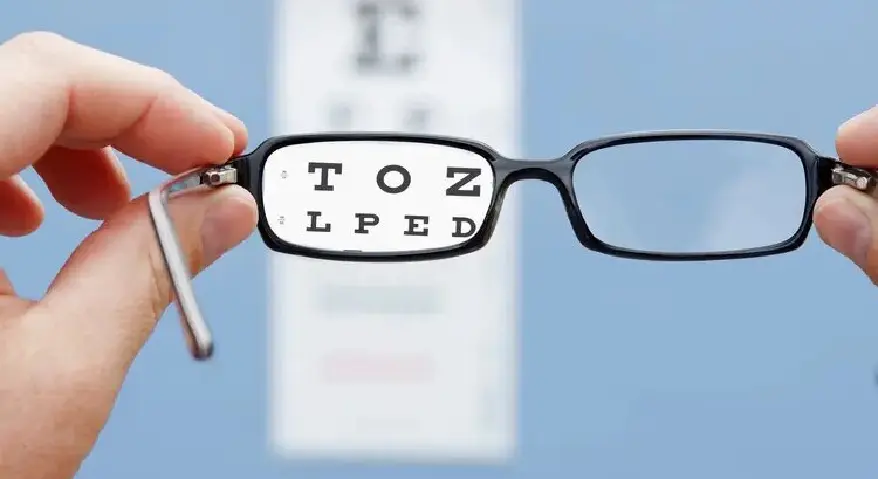
Visual acuity is an indicator of the eye's ability to distinguish details of objects at a specific distance, usually presented as a score, such as 1.0 or 2.0. Many people are familiar with these numbers—especially when someone around them likes to boast about their "2.0 vision."
However, for the vast majority of people whose vision is not ideal, these numbers often seem abstract, and it can be difficult to determine their own level. To accurately understand the meaning of these visual acuity values, we need to start with the basic concepts: the definition of visual acuity, common testing methods, and how to correctly interpret the results. Next, we will break down these key points step by step to help you clearly understand your own vision.
How is visual acuity measured?
Visual acuity measurement is a fundamental part of an eye exam, used to assess the eye's ability to distinguish details. During the exam, ophthalmologists typically use standardized visual acuity tests to determine your visual clarity; the core tool for this test is the "visual acuity chart." Before understanding the specific steps, let's familiarize ourselves with some of the most commonly used types of visual acuity charts.
Common Types of Visual Acuity Charts
1. Snellen Chart
The Snellen chart is the most widely used visual acuity testing tool in clinical practice, hence many people refer to the entire visual acuity test as the "Snellen test."
This chart consists of a series of capital letters (optotypes) arranged from largest to smallest, used to assess the smallest letter the examinee can distinguish at a standard distance. This method was developed by Dutch ophthalmologist Herman Snellen and is still in use today.
2. Tumbling E Chart
Also designed by Dr. Snellen, the Tumbling E Chart is primarily used for illiterate or verbally challenged individuals, such as young children, adults with limited literacy, or patients unable to communicate verbally.
Subjects do not need to read letters; they simply point to or say the direction of the opening of the letter "E," and vision is assessed through directional identification.
3. Pictorial Chart
For young children, clinical practice often uses visual acuity charts with simple shapes, animals, or everyday objects as visual targets, such as the Allen Chart.
These charts utilize familiar patterns to improve test accuracy and cooperation.
Standard Procedure for Vision Testing
Placing the Visual Acuity Chart
Standard vision testing requires the subject to maintain a distance of approximately 20 feet (about 6 meters) from the chart. If room space is limited, the doctor will use a mirror to simulate the standard distance.
Line-by-Line Visual Acuity Test
Without wearing glasses or contact lenses, the examinee must read the letters or point out the direction of the shapes line by line from the top of the visual acuity chart to determine the smallest line that can be clearly identified.
Monocular Test
To obtain more accurate data, the ophthalmologist will test the visual acuity of each eye separately. The examinee must cover the other eye to answer the test individually.
Result Interpretation and Prescription
The doctor will calculate the visual acuity score based on the smallest line of letters that can be identified and, in conjunction with other tests such as refractive errors, formulate a suitable prescription for eyeglasses or further treatment recommendations.
How to Interpret Vision Test Results?
Many people have heard of "20/20 vision," but not everyone understands what these numbers actually represent. To correctly interpret vision test results, we need to understand the meaning behind these numbers.
What do vision scores mean?
Vision scores are presented as ratios to compare a test-taker's performance with that of people with "normal vision" when identifying the same optotypes.
First Number: Test Distance
The first number in the ratio represents the distance between the test-taker and the eye chart. In countries using the imperial system, this is usually 20 feet, while in metric systems, it is 6 meters.
Second Number: Comparison of Discrimination Ability
- The second number represents how far a person with normal vision can distinguish the smallest line of letters you can recognize.
- The larger the second number, the worse your vision.
- This is because people with normal vision can see things that you would need to get much closer to see clearly at a greater distance.
Common Vision Rating Examples
20/20: Standard Visual Acuity
20/20 is considered normal or average visual acuity, meaning you can see the same smallest line of letters as an average person at 20 feet.
It's important to note that "normal" does not mean "perfect." A visual acuity of 20/20 does not mean your vision is flawless in all aspects; it only reflects that your clarity is within the normal range. Furthermore, refractive errors such as nearsightedness, farsightedness, or astigmatism are very common, and many people need to rely on glasses or contact lenses to achieve normal vision.
20/40: Mild Vision Impairment
If your visual acuity is 20/40, it means you can only see clearly at 20 feet what someone with normal vision can see at 40 feet.
This is considered mild visual impairment. Some people may not feel a significant impact in daily life, but wearing corrective lenses will make vision clearer and more comfortable.
20/100: Moderate Visual Impairment
A visual acuity of 20/100 means you must be 20 feet away from a target to see an object that a person with normal vision can see at 100 feet. This is a significant visual impairment and usually requires correction or further ophthalmological evaluation.
Uncorrected Visual Acuity vs. Best Corrected Visual Acuity (BCVA)
Visual acuity test results are typically recorded in two ways:
- Uncorrected Visual Acuity (UCVA): Visual acuity without glasses or contact lenses.
- Best Corrected Visual Acuity (BCVA): The best visual acuity achieved with glasses or contact lenses.
Best corrected visual acuity is often used as the standard of assessment when it comes to driving qualifications or specific occupational requirements. For example, most U.S. states require a minimum BCVA of 20/40 for driver's license applicants.
World Health Organization (WHO) Visual Acuity Classification Standards
According to the WHO definition, visual acuity can be classified into the following levels:
- Mild visual impairment: 20/40 to 20/60
- Moderate visual impairment: 20/60 to 20/200
- Severe visual impairment: Below 20/200
These classifications help doctors assess your visual health and develop appropriate intervention plans.
When Your Vision Isn't 20/20
Vision below 20/20 is actually quite common. Data shows that only about one-third of adults have natural 20/20 vision without wearing any corrective lenses or undergoing refractive surgery. Therefore, if your vision is below this standard, it doesn't mean your eyes are "abnormal."
When vision is below 20/20, the reasons may include refractive errors such as myopia, hyperopia, and astigmatism, or it may be related to other eye health conditions. An ophthalmologist or optometrist will provide the most suitable correction method based on your examination results, such as eyeglasses, contact lenses, or refractive surgery, and assess whether additional treatment is needed.
It's important to emphasize that many people achieve 20/20 or close to this level of vision after wearing appropriate corrective lenses. Furthermore, having slightly below 20/20 vision does not hinder normal life or daily activities. The key is to ensure clear, comfortable vision that meets your personal work and life needs.


