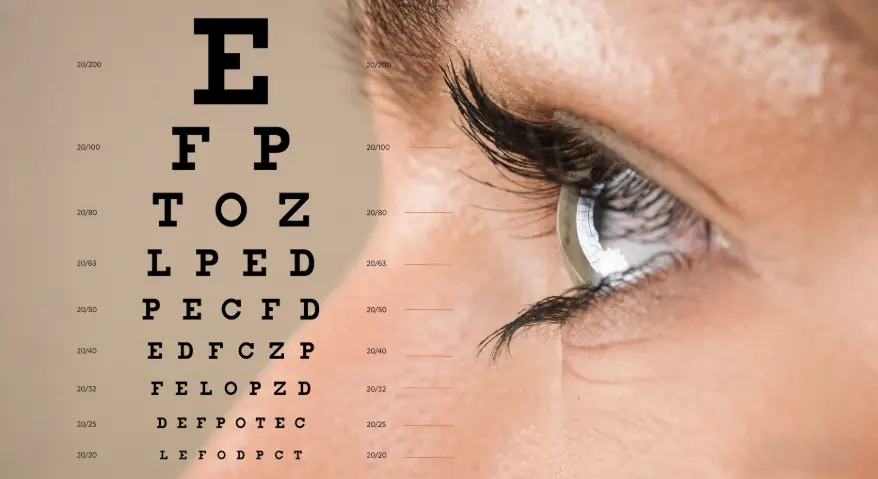
When people mention having 20/20 vision, they often do so with a confident, even proud tone, as if it represents "perfect vision" or "seeing more clearly than others." In everyday language, "20/20" is also often used to describe clear and accurate judgment, further reinforcing the impression of its superiority.
However, from a medical and optometric perspective, what does 20/20 vision actually mean? Is it truly the highest standard for measuring visual health or visual ability? Understanding the scientific definition of 20/20 vision helps us to more objectively understand our own vision and avoid misconceptions or over-mythologizing this indicator.
What does 20/20 vision mean?
20/20 vision is a standard measure used to assess visual acuity, and is generally considered the average level of vision achievable by a normal adult under ideal conditions. It's important to note that it reflects the "ability to see details," not a comprehensive evaluation of overall visual health.
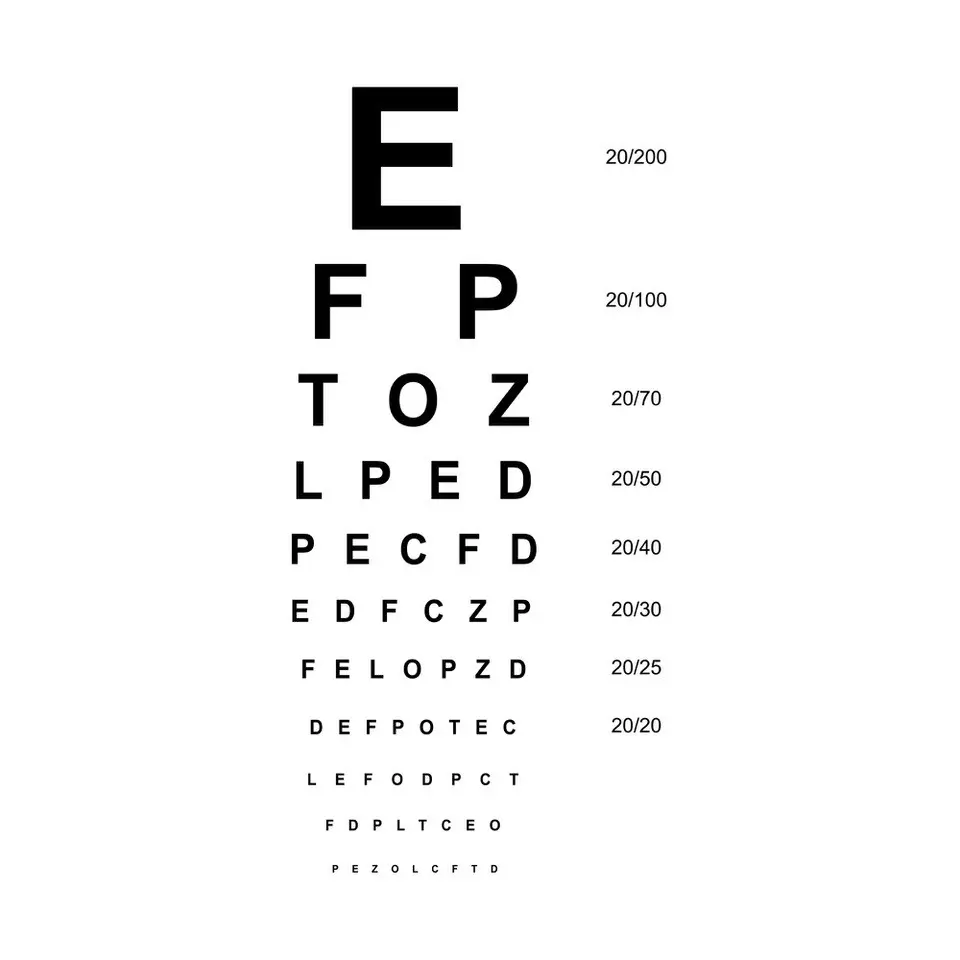
Vision testing is typically performed using a Snellen chart. This chart consists of a series of letters or symbols created under standard conditions, with the letter sizes progressively decreasing in precise proportions. It is a widely used standardized tool in clinical optometry. Although the theoretical testing distance is 20 feet (approximately 6 meters), in actual examinations, a mirror system or electronic vision chart is often used to simulate this distance, ensuring the accuracy and consistency of the test results.
In the expression "20/20," the first number, 20, represents the testing distance between the subject and the vision chart; the second number indicates the distance at which a person with normal vision can clearly identify the same line of letters.
For example, 20/20 vision means that at a distance of 20 feet, you can see the smallest letters that a person with standard vision should be able to discern at that distance; while 20/60 means that at 20 feet, you can only see letters that a person with normal vision could see at 60 feet. This comparative method makes the differences in visual acuity intuitive and easy to understand.
Recommended reading: What Is Visual Acuity?
Is 20/20 vision equivalent to perfect vision?
Not exactly. 20/20 vision simply means your visual acuity is within the normal range, meaning your ability to see details under standard conditions is comparable to most healthy adults. In ophthalmology and optometry, "normal" doesn't mean "excellent" or "perfect," but rather a statistically defined reference level. Research and clinical data show that only about 35% of adults naturally have 20/20 vision without any vision correction.
So, is having 20/20 vision a good thing? Certainly, it's a positive sign. If you can achieve 20/20 vision without glasses or contact lenses, it usually indicates good refractive status and normal visual function. However, it's important to clarify that 20/20 doesn't represent "superior" visual ability; it doesn't encompass other important visual functions such as contrast sensitivity, night vision, stereoscopic vision, or visual endurance.
Is there better vision than 20/20?
Yes. When the second number in the vision score is less than 20, it means visual acuity is better than average. For example, 20/15 vision means you can see details at 20 feet (approximately 6 meters) that a person with average vision can only see at 15 feet (approximately 4.5 meters).
So, does true "perfect vision" exist? From a scientific perspective, there is no single standard for "perfect vision." The physiological limit of the human eye is generally considered to be close to 20/10 or 20/8, and naturally achieving this level without laser surgery or other medical intervention is extremely rare. In comparison, some birds of prey (such as eagles) can achieve visual resolution equivalent to 20/5 under certain conditions.
What does vision worse than 20/20 mean?
When the second number in the vision score is greater than 20, it indicates that visual clarity is below normal levels. For example, in most U.S. states, 20/40 is the minimum visual acuity required to obtain an unrestricted driver's license; while visual acuity of 20/200 or worse, even with best correction, is typically defined as legal blindness.
Do you still need to wear glasses if your vision is 20/20?
Assuming there are no other eye diseases or functional abnormalities, most people with 20/20 vision typically do not need to wear glasses or contact lenses for distance vision correction. This means their refractive state is essentially normal, allowing them to see distant objects clearly in daily life.
However, vision is not static. With age, especially around 40 years old, the lens's ability to adjust gradually declines, and almost everyone develops some degree of presbyopia (commonly known as farsightedness). Even if distance vision remains 20/20, glasses or progressive multifocal lenses may be needed to improve near vision and overall visual comfort.
Furthermore, it's important to emphasize that visual acuity is only one dimension of vision assessment. In a comprehensive eye examination, the optometrist will also assess overall eye health, including the presence of retinal or corneal problems, and test key visual functions such as color vision, binocular coordination, depth perception, and peripheral vision. These factors are equally crucial for overall visual quality and daily safety.
Therefore, even with 20/20 vision, regular professional eye examinations remain an important safeguard for maintaining long-term visual health.


