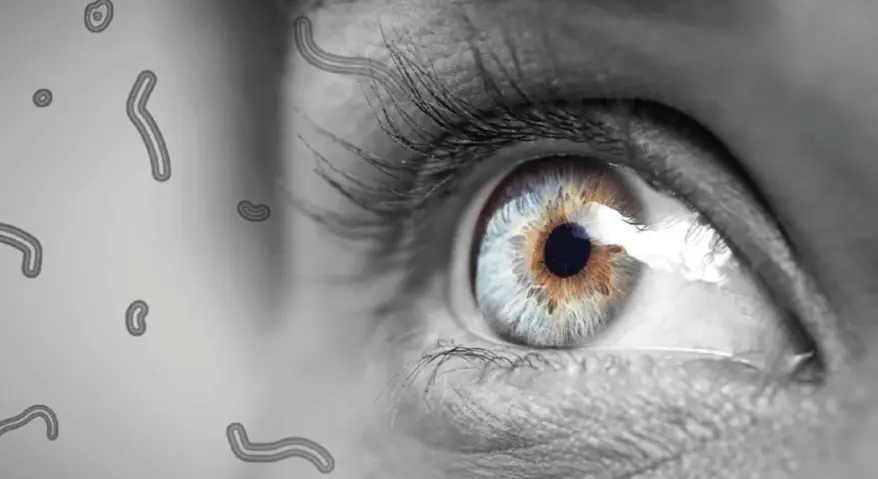
Many people sometimes experience those annoying specks or wavy lines in their eyes that seem to wander or drift across their field of vision. These are called eye floaters. But why do they happen? What are they? And where do they come from?
This article will help you learn more about eye floaters. Let's get started.
What are Eye Floaters?
Eye floaters are small, floating dots, lines, or spider-web-like images that appear in the visual field, especially when looking at a bright background (such as a blue sky, white paper, or a white wall). These images are not caused by external forces but by shadows cast on the retina by changes in the structure of the eye.
What Causes Eye Floaters?
The vitreous humor, a transparent, gel-like substance, fills the eyeball. With aging, the vitreous humor gradually liquefies and shrinks, and the collagen fibers within it may aggregate into clumps or cords. When light passes through the eye, these irregular clumps cast shadows on the retina, giving the impression of small spots or lines floating. This phenomenon is medically known as eye floaters.
Also, the process of the vitreous humor separating from the retina is called posterior vitreous detachment. This process is common in middle-aged and elderly people and may also be accompanied by the sensation of flashing lights (medically known as photopsia) due to the vitreous humor pulling on the retina.
Symptoms of Eye Floaters
Eye floaters can appear in a variety of forms, and different people may describe them differently. Common symptoms include:
- Small black or gray spots
- Lines, waves, or spiderweb-like images
- Irregular shapes, such as small clouds, amoeba-like, or spider-like structures
- These images typically move with your eye movements and tend to quickly drift away from your sight when you try to look directly at them.
Other Possible Causes of Eye Floaters
While eye floaters are common in the natural aging process, in some cases they can be an early sign of an underlying eye condition, prompting further investigation. The following pathological conditions may cause or worsen eye floaters:
- Retinal tears or detachments
- Diabetic retinopathy
- Ocular trauma
- Complications from eye surgery
- Ocular inflammation or bleeding
- Intraocular tumors or infections
- High myopia
- Posterior vitreous detachment (PVD)
How to Get Rid of Eye Floaters?
Most eye floaters are benign and pose no serious threat to vision, so observation rather than intervention is the most common treatment. Over time, the brain tends to adapt and ignore these floating images, making them less disruptive to daily life.
However, if eye floaters suddenly increase and are accompanied by flashing lights or curtain-like shadows, seek medical attention immediately to rule out serious conditions such as retinal tears or detachments.
If treatment is warranted, your doctor may recommend the following options:
Vitrectomy: This procedure involves surgically removing part or all of the vitreous humor and filling the eye with a clear replacement fluid to reduce eye floaters. This surgery can improve vision in patients with severe vision loss, but it carries risks, including retinal detachment, retinal tears, accelerated cataract development, or recurrence of eye floaters. Therefore, it is usually only considered when symptoms are severe and significantly impact quality of life.
Other options: Currently, there are no well-proven non-surgical or home remedies that effectively eliminate eye floaters.
Prevention and Complications
Age-related eye floaters are unavoidable, but the risk of developing some pathological forms of eye floaters can be reduced through a healthy lifestyle and management of chronic conditions (such as diabetes and hypertension). Eye floaters themselves generally do not directly cause complications, but if associated with retinal disease, they can lead to serious vision loss.
Generally speaking, most eye floaters are harmless, but if they suddenly increase in number, are accompanied by flashing lights, or if you experience partial visual field loss, you should see a doctor immediately to rule out serious conditions such as retinal detachment. Regular annual eye exams are the best way to maintain overall eye health.


