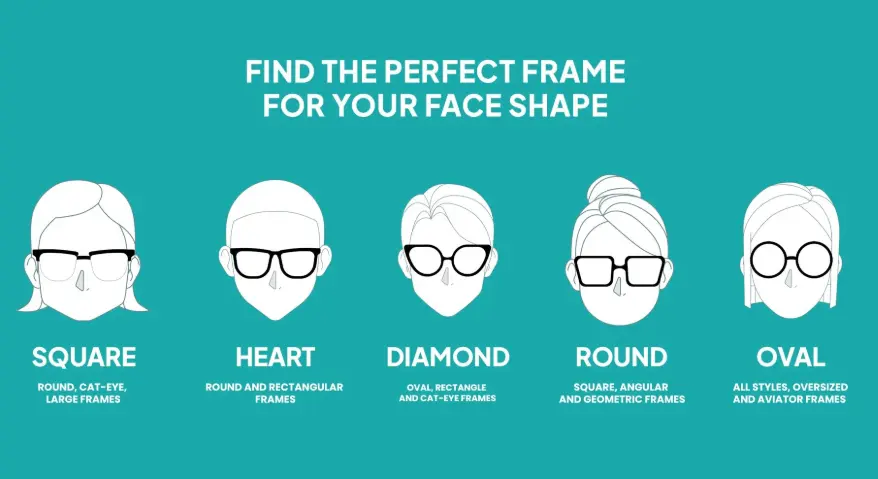
When choosing eyeglasses, people often focus on factors like color, size, and comfort, but one equally important yet often overlooked key point is face shape. Understanding your face shape can provide clearer direction when selecting frames, helping you make more efficient choices.
There's a natural visual relationship between different face shapes and frame lines. The right frames can not only enhance facial features but also balance overall proportions, making your features appear more harmonious and defined. From a professional perspective, face shape analysis is a practical reference tool, not an absolute standard.
It's important to emphasize that face shape is not the only criterion for choosing glasses, nor should it override personal style preferences and comfort. There's no fixed formula for "face shape-based frame selection," and it doesn't require strict adherence. It's best used as a helpful guide when you're hesitating between multiple frames, or as a way to explore different styling options.
If you're wondering, "What is my face shape?", don't worry. Through simple and clear methods, we can help you more accurately determine your face shape, providing a more professional and rational reference for choosing glasses.
Does my face shape suit glasses?
Strictly speaking, no two faces are exactly alike. Even so, based on overall facial contours and proportions, visual design and the eyewear industry typically categorize face shapes into six common types: round, oval, heart-shaped, square, triangular, and diamond-shaped. This classification isn't about "labeling," but rather to help you understand your facial structure more rationally, allowing you to make better choices when selecting frames.
How to determine your face shape
You can stand in front of a mirror or take a selfie with your phone, focusing on the width variations and overall proportions of your face. For greater accuracy, you can record the following key measurements:
- Width of the widest part of your forehead
- Distance between the highest points of your cheekbones
- Width of the widest part of your jawline
- Length of your face from the midpoint of your hairline to the tip of your chin
By comparing the "width distribution" and the "ratio of face length to face width," you can determine which face shape your face most closely resembles. It's important to note that most people's face shapes fall somewhere between two types, so simply find the closest match; a perfect fit isn't necessary.
Overview of Common Face Shape Characteristics
Round Face
Round faces have soft, smooth lines, with the face length and width being similar. The width of the forehead, cheekbones, and jawline are not significantly different. The overall appearance is full and friendly, lacking sharp angles in the facial contours.
Oval Face
Oval faces are considered the most balanced face shape. The cheekbones are usually the widest point, with the forehead and chin slightly narrower, and the face length is approximately twice the face width. The chin and forehead lines are rounded, giving an overall natural and harmonious appearance. If the lines are slightly straighter, it may sometimes be called a "long face," but the basic characteristics still fall within the oval category.
Heart-Shaped Face (Inverted Triangle)
The defining characteristic of a heart-shaped face is a wide forehead and a gradually narrowing jawline, with a pointed chin. The cheekbones are often high, giving the upper part of the face more prominence.
Square Face
Square faces have distinct lines and strong contours. The width of the forehead, cheekbones, and jawline are similar, and the chin is often straight or angular. The overall structure is strong, and the facial features are clearly defined. Triangular Face
A triangular face is primarily characterized by its widest point being at the jawline, with a relatively narrow forehead. The face shape gradually narrows from the bottom upwards. The cheekbones are less prominent, but the chin and jawline are very pronounced.
Diamond Face
A diamond-shaped face is relatively rare, with its widest point at the cheekbones. The forehead and jawline are relatively narrow. It is usually accompanied by high cheekbones and a small chin, resulting in a three-dimensional and distinctive overall facial contour.
Eyeglasses Selection Guide for Different Face Shapes
After understanding common face shapes, the next step is naturally to consider: how do eyeglass frames complement face shapes? From a professional eyewear fitting and visual design perspective, the shape, lines, and proportions of the frame all affect overall facial balance. The good news is that choosing the right glasses for your face shape isn't complicated; it's an aesthetic skill that anyone can master.
One thing to clarify first: there are no absolute rules when choosing glasses. Face shape is only one dimension to consider; personal style, wearing comfort, and usage scenarios are equally important. The ideal frame is the one that makes you feel natural, confident, and comfortable when wearing it.
Eyeglasses Suitable for Round Faces
Round faces are characterized by soft lines and a rounded outline. To visually enhance structure, it's recommended to choose frames with clean lines and sharp corners to create contrast.
Professional Advice:
- Prioritize styles with strong straight lines and more pronounced horizontal proportions.
- Wider frames help to visually lengthen the face.
Recommended styles: Rectangular frames, square frames, geometric frames, cat-eye frames, browline glasses, full-rim glasses
Eyeglasses Suitable for Oval Faces
Oval faces are considered one of the most versatile face shapes due to their balanced proportions. When choosing frames, the focus is on maintaining this balance, rather than deliberately modifying it.
Professional Advice:
- Avoid overly narrow frames to prevent lengthening the face.
- You can freely adjust the style based on your facial features: soft or sharp.
Recommended styles: Almost all frame types are suitable; the key is to choose frames with a width close to the widest part of your face (usually the cheekbones or eyes).
Eyeglasses Suitable for Heart-Shaped Faces
Heart-shaped faces are wider at the top and narrower at the bottom, with a prominent forehead and a relatively delicate chin. The choice of frames should focus on balancing the upper and lower proportions.
Professional Advice:
- Frames slightly wider than the jawline help with visual stability.
- Frames with rounded lower edges can soften a pointed chin.
Recommended styles: Oval frames, round frames, aviator frames, semi-rimless glasses
Eyeglasses Suitable for Square Faces
Square faces have distinct outlines and strong lines. Neutralizing the straight lines with frame curves is the core idea when choosing glasses.
Professional Advice:
- Choose frames with a noticeable curve and soft lines.
- A slightly higher nose bridge and frames wider than the middle of the face will create a more harmonious look.
Recommended styles: Round frames, oval frames, thin metal frames, semi-rimless glasses
Eyeglasses suitable for triangular faces
Triangular faces are characterized by a wide jawline and a relatively narrow upper face. The frames should visually enhance the upper part of the face.
Professional Advice:
- Frames with emphasized upper edges help balance the jawline.
- Wide frames can increase the three-dimensionality of the upper part of the face.
Recommended styles: Rectangular frames, browline glasses, cat-eye frames
Eyeglasses suitable for diamond-shaped faces
Diamond-shaped faces have the widest cheekbones, with narrower forehead and jawline, resulting in a distinct and prominent overall contour. Frame selection should avoid excessive exaggeration to maintain balanced proportions.
Professional Advice:
- Choose frames with a balanced structure and soft lines.
- Frames with slightly wider browlines or shallower lower frames appear more stable.
Recommended styles: Browline glasses, cat-eye frames, round frames, oval frames, semi-rimless glasses
Face Shape is a Reference, Not a Standard Answer
When choosing glasses based on face shape, don't treat any "recommended rules" as strict requirements. From a professional perspective, face shape is only a supplementary reference factor, and its importance should always be secondary to fit and personal style. Truly suitable glasses should strike a balance between functionality and aesthetics.
Fit: A More Important Basic Condition Than Face Shape
A well-fitting pair of glasses directly affects wearing comfort and visual clarity. Frames that are too large tend to slip, while those that are too small can press on the face, affecting not only the wearing experience but also potentially leading to unstable vision and blurred vision.
When choosing, you should focus on the following elements:
- Whether the frame is stable and not prone to slipping
- Whether the temple length fits the ears
- Whether the nose pads match the structure of the nose bridge
For specific facial features, you can also choose more targeted designs. For example, people with low nose bridges are usually better suited to low-bridge or Asian-fit frames for a more stable and comfortable wearing experience.
Personal Style: What Determines Whether You Truly Like Them
There is no "optimal solution formula" for glasses. In most cases, choosing a frame depends on how you want to express your personal style. It's an aesthetic preference unique to you, and an important source of confidence when wearing them.
If you find it difficult to define your style, try starting with a few questions:
- How would I usually describe my clothing style or temperament?
- What role do I want my glasses to play in my overall look?
- Do I prefer a bold and expressive style, or a subtle and refined one?
For example, people with strong personalities and expressive styles can often easily wear cat-eye or highly designed frames; while those who prefer a simple and elegant style may prefer rectangular frames with clean lines and clear contours.
Color is Also Cruisible
The color of the frame significantly affects the overall temperament. Bright, transparent colors can enhance vitality, while soft, neutral tones appear more stable and sophisticated. The right color choice can often make the same pair of glasses look completely different.
If a pair of glasses leaves a strong impression on you, don't easily dismiss them because they "theoretically don't suit a certain face shape." Trying them on is always the most reliable way to judge. The perfect eyeglass frames for you don't depend on your face shape category, but rather on whether they make you feel comfortable, confident, and willing to wear them every day.


