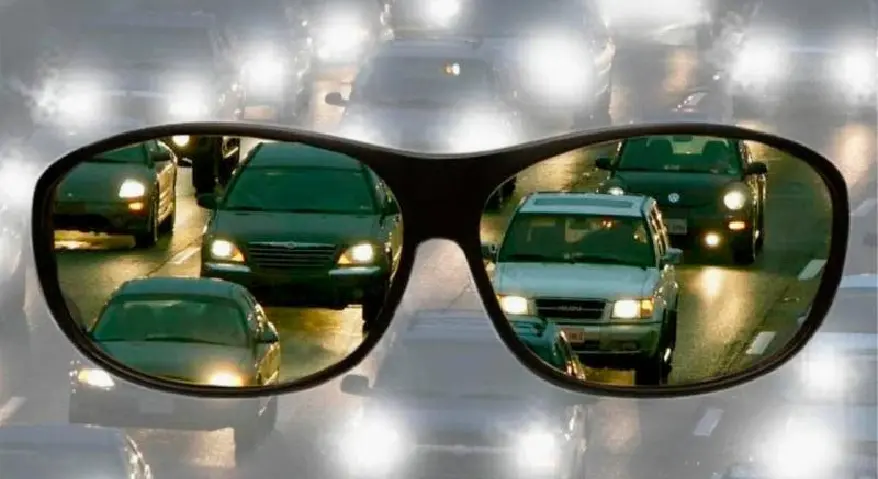
Have you ever experienced blurred vision and difficulty discerning the road ahead while driving at night or at dusk? You're not alone. Many drivers face challenges such as difficulty seeing road signs and being dazzled by oncoming headlights in low-light conditions. These visual challenges not only affect driving comfort but can also jeopardize driving safety.
On roads with low light or no streetlights, strong headlight reflections often cause momentary loss of clear vision, increasing driving risks. To address this, more and more people are turning to specialized night driving glasses, especially those with anti-reflective coatings (AR coatings). These effectively reduce glare, improve clarity and contrast, helping drivers see more clearly and safely at night.
However, the market offers a wide variety of night driving glasses, and not all products are equally effective. Do they truly improve night vision? In this article, we'll delve into why vision deteriorates at night, what are is night driving glasses, and other methods besides wearing night driving glasses to enhance nighttime driving safety and visual performance.
What are Night Driving Glasses?
Night driving glasses are special eyewear designed for use in low-light or nighttime driving environments. They typically use light yellow to amber lenses, sometimes combined with anti-reflective (AR) or polarized coatings to reduce glare and improve visual clarity and contrast. Their core purpose is to help drivers see the road, signs, and pedestrians more clearly at night or in twilight, thereby improving driving safety and comfort.
The main function of yellow or amber lenses is to filter blue light—blue light is high-energy, short-wavelength light that is easily scattered when it enters the eye, causing glare and blurred vision. By reducing blue light interference, night driving glasses enhance the contrast between objects and the background, making it easier for drivers to distinguish road conditions and obstacles in dim environments. The anti-reflective coating further reduces reflections from headlights, streetlights, and other strong light sources on the lens surface, significantly reducing the glare common during nighttime driving.
It is important to note that night driving glasses are usually over-the-counter lenses and cannot correct refractive errors such as myopia or astigmatism. If you require vision correction, it is recommended to choose prescription glasses with an anti-reflective coating or to add an AR coating to your existing glasses for a better nighttime vision experience.
While night driving glasses can improve visual comfort and reduce eye fatigue to some extent, their effectiveness varies from person to person and cannot replace a professional vision test or medical correction. For persistent nighttime vision problems, consult an ophthalmologist to rule out underlying vision impairments or eye diseases.
Understanding Night Driving
Night driving differs significantly from daytime driving. It not only tests driving skills but also places higher demands on the visual system. In low-light environments, the field of vision narrows, contrast decreases, and the human eye's limited ability to adapt to light in the dark makes it more difficult to identify obstacles, road signs, and pedestrians. These factors collectively lead to a significant increase in the risks of night driving.
1. Light and Glare Issues
Oncoming vehicle headlights, streetlights, and traffic lights are the main sources of glare in night driving. Strong light creates a stark contrast against a dark background, easily causing temporary blindness or blurred vision, thus distracting the driver and increasing the risk of accidents. The blue-white light emitted by modern vehicles' LED and xenon headlights is particularly prone to causing glare. This reflective effect is further exacerbated by dirt on the windshield or lens surface.
2. Insufficient Visibility and Lighting Limitations
Many roads are poorly lit, especially in rural areas or on highways, where drivers rely solely on their headlights to illuminate a limited area. Streetlights commonly use sodium vapor lamps, which emit a yellowish light. While energy-efficient, this light has poor visibility of object colors and shapes, making it harder for drivers to judge obstacles or road boundaries.
3. Visual and Eye Health Factors
Night driving ability is also closely related to individual vision.
Myopia: Affects the ability to see distant objects, making it difficult to clearly identify road signs and pedestrians.
Astigmatism: Causes light diffusion, resulting in halos or stripes around lights, severely interfering with visual clarity.
Night blindness: Caused by retinal dysfunction or vitamin A deficiency, resulting in difficulty seeing clearly in low light.
Furthermore, decreased depth perception in nighttime environments makes it more difficult to judge the distance and speed of other vehicles. Frequent adjustments between bright and dim light also easily cause visual fatigue.
4. The Impact of Blue Light
Blue light has a short wavelength and high energy, easily scattered in the air and within the eye, leading to decreased contrast and increased glare. Modern car lights (especially LED headlights) are rich in blue light components, which is one of the reasons why many drivers feel "glare" at night.
In summary, the visual challenges of nighttime driving stem from external lighting conditions, road lighting environment, and the driver's own eye health. To improve the safety and comfort of nighttime driving, night driving glasses have emerged. They provide a feasible assistance solution for nighttime driving by reducing blue light and glare and improving visual contrast.
Do Night Driving Glasses Work?
The actual effectiveness of night driving glasses has long been controversial. While many drivers claim they reduce glare and eye strain, scientific research results are inconsistent.
From a visual science perspective, the yellow or amber lenses of night driving glasses do filter some blue light, thus improving contrast. However, this advantage is primarily seen in bright environments such as daytime or cloudy days. At night, blue light filtering actually reduces the overall amount of light entering the eyes, leading to decreased visual brightness and making it harder for drivers to spot pedestrians or road obstacles.
Nevertheless, some drivers find these glasses subjectively provide a certain level of visual comfort, especially when facing strong headlights or driving for extended periods at night. Some driving safety education organizations (such as DriveSafe Online) also suggest using night driving glasses as an aid if one feels they improve comfort and do not impair vision.
If you frequently experience blurred vision, severe glare, or difficulty seeing the road while driving at night, it is recommended to first have a professional vision test. For drivers with myopia, hyperopia, or astigmatism, wearing clear prescription lenses with anti-reflective coatings is a safer and more scientific way to improve night vision.
Scientific Methods to Improve Night Vision
Night driving places higher demands on the visual system. Any factor that causes blurred vision, increased glare, or eye fatigue will weaken night vision and consequently affect driving safety. In addition to wearing appropriate glasses, maintaining good eye health and driving habits are equally important. Here are some scientific methods recommended by experts to help you achieve clearer and safer vision at night.
1. Regular Professional Eye Exams
Maintaining good night vision begins with ensuring your vision is healthy. It is recommended to have a comprehensive eye exam every one to two years to ensure accurate prescriptions and early detection of potential vision problems such as astigmatism, cataracts, or diabetic retinopathy. These conditions directly affect night vision. If you notice a decline in night vision, consult an ophthalmologist promptly for a personalized correction plan.
2. Choosing the Right Lens Coating
For drivers who require prescription glasses, choosing lenses with an anti-reflective (AR) coating is crucial. AR coatings effectively reduce reflections and glare from headlights, streetlights, and other light sources, thereby improving visual clarity and comfort. Some high-end coatings (such as anti-fouling and anti-scratch coatings) can also keep lenses clean and prevent dirt from amplifying light reflection.
3. Maintain a clean driving environment.
Stains and dust significantly amplify glare. Regularly clean your eyeglass lenses, windshield (both inside and out), and headlights, and replace windshield wipers regularly to prevent streaks or scratches. These simple maintenance habits can significantly improve visibility at night.
4. Adjust interior lighting to reduce eye strain.
When driving at night, lower the brightness of the dashboard and center console to reduce visual interference. Excessively bright interior lights cause pupil constriction, making it harder for the eyes to adapt to darkness.
5. Avoid direct eye contact with glare and allow your eyes time to adjust.
When transitioning from a bright environment to darkness, the eyes need several minutes to adjust their visual sensitivity. Before driving, allow your eyes to gradually adapt to low-light conditions and avoid suddenly entering a dark area from bright light. Additionally, avoid looking directly at oncoming headlights while driving to prevent temporary blindness or glare.
6. Pay attention to overall health and eye condition.
Maintaining adequate hydration helps keep eyes moist, preventing dry eye syndrome and thus avoiding blurred night vision caused by dryness. For some individuals, supplementing with nutrients such as vitamin A can also help maintain normal night vision, but this should be done under the guidance of a doctor.
Clear and stable vision is crucial when driving at night or in low-light conditions. Elklook is committed to providing you with safe and stylish nighttime driving solutions. If you have astigmatism or other conditions affecting nighttime vision, we recommend updating your prescription promptly and choosing prescription glasses with an anti-reflective coating (AR Coating) to maximize clarity of your nighttime driving vision.
Our prescription glasses for nighttime driving use high-quality anti-reflective lenses that effectively reduce strong glare from streetlights, headlights, and other light sources, resulting in higher visual contrast and sharper edges. Benefits include:
- Reducing glare reflections by up to 78%, improving nighttime visibility;
- Providing comprehensive UV protection, protecting your eyes from potential light damage;
- Scratch-resistant lens design for durability and long-lasting performance.
Whether you prefer a minimalist oversized frame or an elegant cat-eye style, Elklook offers a wide variety of frame styles and lens options. Our professional team will assist you in customizing glasses best suited to your nighttime driving needs, ensuring a safer and more comfortable visual experience on every journey.


