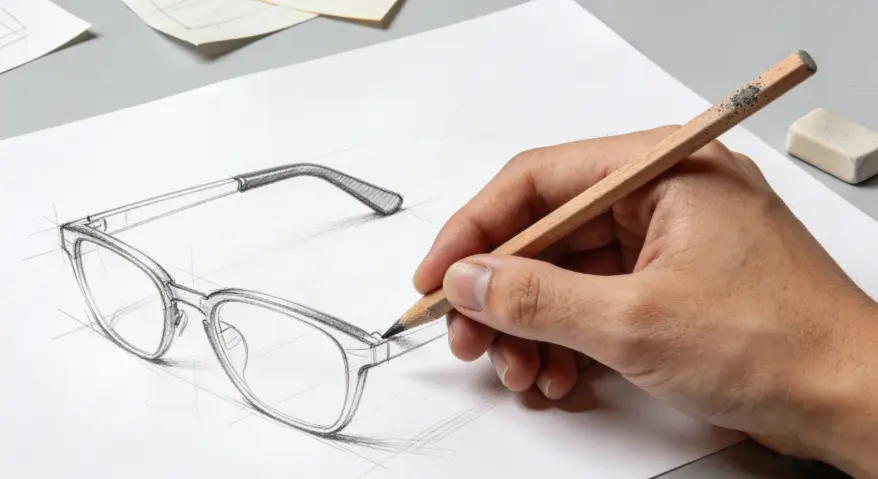
Although eyeglasses appear lightweight and simple, and are almost unnoticeable when worn, they are actually a precisely engineered system of interconnected optical components. Each part of the frame serves a specific function, and only through precise coordination can stable vision correction be ensured, while also maintaining comfort and aesthetic design. If any component becomes loose, worn, or damaged, the problem is often difficult to accurately describe, and it can be challenging to pinpoint the source of the malfunction.
A systematic understanding of the structure of eyeglasses is key to identifying and resolving problems. This not only helps in understanding the assembly and working principles of each component, but also allows for faster identification of the cause of any abnormalities. Furthermore, mastering the correct terminology for eyeglass components significantly improves communication efficiency with optometrists or opticians, leading to more professional and accurate problem descriptions. Based on this, the following will provide a comprehensive analysis of the main components of eyeglasses, helping you understand from a professional perspective how eyeglasses function.
Diagram of Eyeglasses Structure
Please refer to the diagram for the standard labeling of each eyeglass component. These labels will help you visually understand the names and positions of the various parts of the eyeglass frame. Next, we will further explain how these components are precisely assembled together.
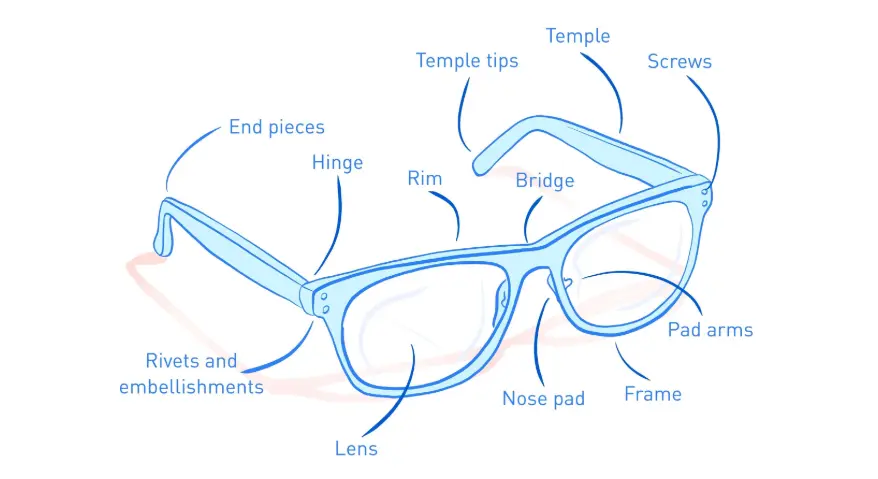
Eyeglasses Parts and Terminology
In the professional eyeglass fitting process, eyeglasses are typically divided into two basic components: lenses and frames. The lenses are the core optical elements that correct vision and are the transparent components through which the wearer directly observes the outside world. Lenses are customized according to the individual's prescription, and their principle of operation is to accurately refract the light entering the eye, causing the image to focus precisely on the retina, thereby effectively correcting common refractive errors such as nearsightedness, farsightedness, and astigmatism.
With the development of optical technology, lenses offer a diverse range of types and materials. Depending on visual needs, lenses can be divided into single-vision lenses and multifocal lenses (such as progressive multifocal lenses) to meet single or multiple distance vision requirements. Ophthalmologists or optometrists will recommend the most suitable lens solution based on your vision condition, usage habits, and lifestyle, and provide professional advice on lens coatings, colors, and functional configurations.
Eyeglass Frames
Eyeglass frames are the overall structure that surrounds and secures the lenses, and can be considered the support system or "skeleton" of the glasses. They not only determine the appearance and style of the glasses but also directly affect wearing stability and comfort. Common frame materials include acetate and metal, with different materials having distinct characteristics in terms of weight, flexibility, and styling, allowing for a range of styles from simple and understated to bold and distinctive.
Structurally, the frame is composed of several precision components working together.
Frame Rim: The frame rim is the part that directly holds the lenses, responsible for securing the lenses and defining the overall shape of the frame. Common shapes include round, square, and oval. Depending on the degree of coverage, frames can be divided into full-rim and semi-rimless designs, with the latter being lighter in appearance. The frame is sometimes also referred to as the frame mount.
Bridge: The bridge is located between the two frame rims, spanning the nose, and is one of the key structures supporting the weight of the frame. The bridge design significantly affects the fit and should match the facial proportions. For example, people with low nose bridges or high cheekbones are usually better suited to frames with a low bridge design. Some frames also have a top bar (also known as a brow bar or sweat bar) above the bridge, which serves as both a decorative element and enhances overall stability.
Nose Pads: Nose pads are the components that directly contact the nose, primarily serving to distribute the weight of the frame, improve wearing comfort, and reduce slippage. Metal frames often use adjustable independent nose pads, usually made of soft plastic; while acetate frames are mostly of an integrated structure, without separate nose pads. The nose pad arms connected to the nose pads can be finely adjusted to adapt to different nose shapes, further optimizing the fit.
Frame Endpieces: On the outer side of the frame, the frame endpieces are important connection points to the temples, usually extending slightly outwards and possibly decorated with rivets or other details to enhance structural strength and visual distinctiveness. Hinges connect the frame endpieces to the temples with screws, allowing the temples to open and close smoothly for easy wearing and storage.
Hinges: Although small, the hinge system is crucial to the durability of the glasses and can be maintained by replacing or adjusting the screws when necessary. Temple Arms: The temple arms extend backward from the frame via hinges, resting above the ears to secure the glasses in place. Their length and curvature vary depending on the design.
Temple Tips: The temple tips (also known as earpieces) are the parts that directly contact the area behind the ears. Some metal frames use softer covering materials at this point to improve comfort and reduce skin irritation. Overall, the precise fit of each component of the frame ensures a balance between aesthetics, stability, and comfort.
Explanation of Sunglasses Structure
From a structural perspective, sunglasses are essentially no different from regular prescription glasses. Their components are identical, including lenses, frames, nose pads, hinges, and temples. The main difference lies in the fact that sunglasses typically use tinted lenses and may also incorporate additional functional designs such as polarization, enhanced UV protection, or anti-glare features to improve visual comfort and protection in bright light conditions.
Understanding the various components of eyeglasses (including sunglasses) is beneficial for daily cleaning, maintenance, and extending their lifespan. It also helps you more rationally evaluate the differences between different styles and structures. Even with complex frame designs, understanding the basic structure allows you to easily identify their functions and features. When trying on different styles of glasses, it's recommended to pay attention to the details and fit of each component to choose an ideal style that suits your personal style while also prioritizing comfort and practicality.


